
The National Council of Churches of Kenya (NCCK) and Green Africa Foundation (GAF) have entered into a 10-year partnership to establish 1,450 Green Africa Villages aimed at tackling environmental degradation, poverty, climate change and energy insecurity while improving rural livelihoods.
The initiative seeks to promote sustainable community development through renewable energy, environmental conservation, agricultural production and skills development, with a model village envisioned for every ward across Kenya.

Under the partnership, Green Africa Foundation will provide technical expertise, environmentally friendly technologies, quality assurance systems and standards, while NCCK will mobilise communities through its Church and Community Mobilisation Process to encourage local ownership, self-reliance and collective action.
The Green Africa Villages model, launched in 2007, is built around three pillars: nurturing people through ethical values and life skills, developing healthy and resilient communities with sustainable livelihood opportunities, and promoting environmental conservation and stewardship.
The programme will support communities in adopting 11 activities, including renewable energy, tree production, horticulture, apiculture, fish farming, animal husbandry, water harvesting, capacity development, ecotourism, waste management, and music, sports, arts and crafts.
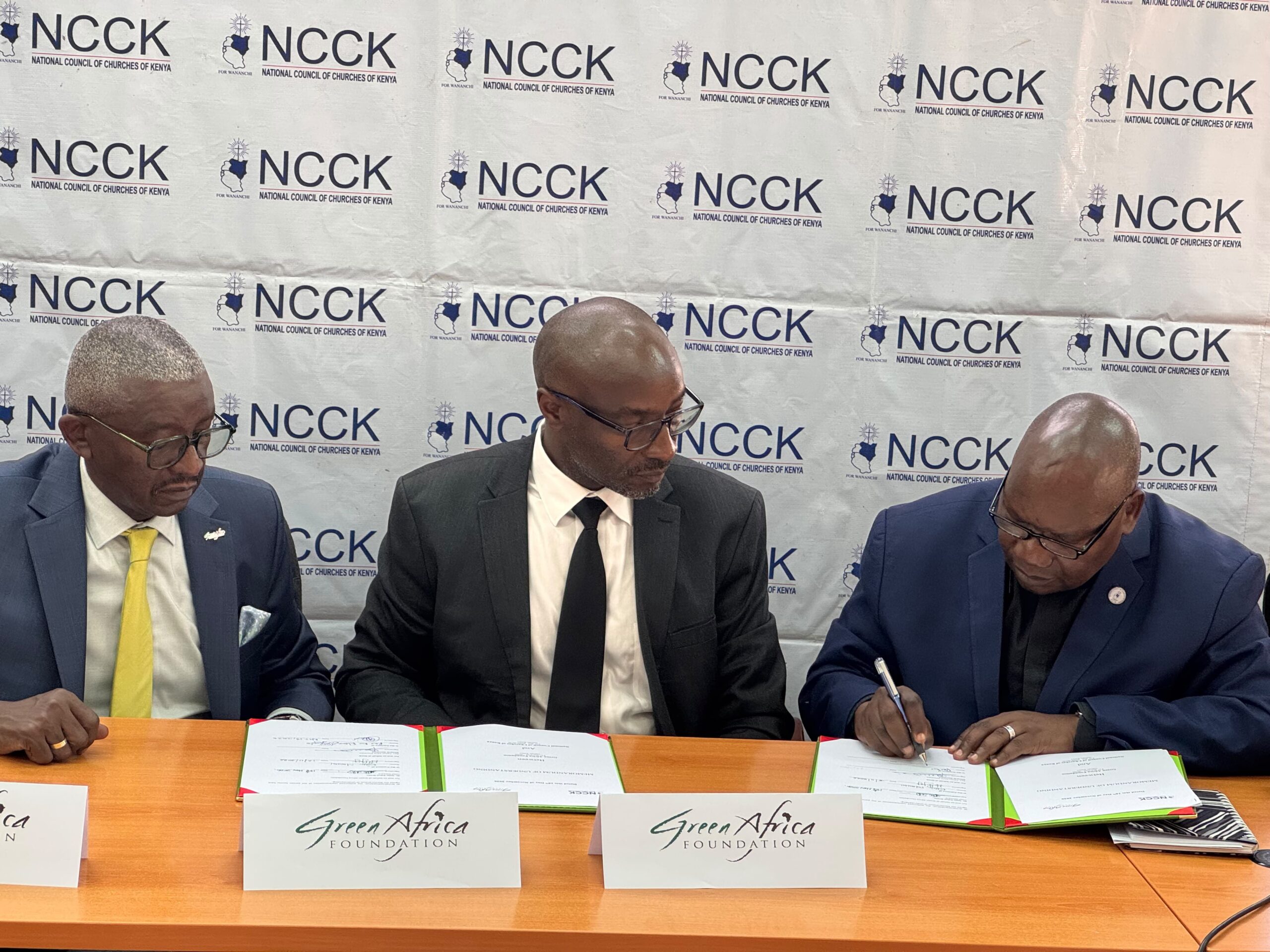
The partners intend to establish model villages that can be replicated across the country, with interventions designed to address interconnected economic, social and environmental challenges facing rural populations.
According to the partnership statement, approximately 67.8 per cent of Kenya’s population, equivalent to about 39 million people, lives in rural areas, where poverty and climate-related shocks continue to affect livelihoods. The statement cites rural poverty at 42.9 per cent and notes that about 40 per cent of Kenyans live below the poverty line.
Energy access also remains a challenge, with the partners stating that only 34 per cent of Kenyans have access to clean cooking solutions. Many households continue to rely on firewood and charcoal, contributing to environmental degradation and health risks.

The initiative is expected to promote alternative energy solutions while supporting food production, water conservation and diversified sources of income to reduce communities’ vulnerability to climate and economic shocks.
Green Africa Foundation, established in Kenya in 2000, focuses on improving livelihoods through sustainable natural resource management and environmental stewardship. NCCK, founded in 1913, is a fellowship of Christian churches and organisations whose work centres on transforming lives towards a just, resilient and sustainable society.
The two organisations say the partnership will contribute to environmental restoration and community transformation by equipping local populations with practical, sustainable solutions to challenges affecting their livelihoods.