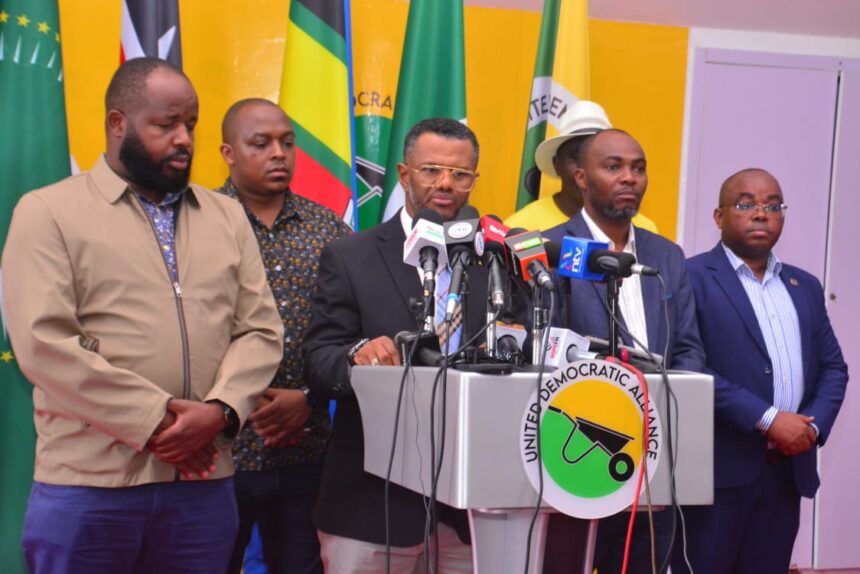
The United Democratic Alliance (UDA) has launched a fierce defence of the government’s fuel pricing strategy, insisting that Kenya’s rising pump prices are the result of global market turbulence rather than domestic policy failure.
In a strongly worded statement issued on April 16, UDA Secretary General Hassan Omar Hassan accused opposition leaders of politicising an international energy crisis and misleading Kenyans for short-term political gain.
The party argued that the government has already moved to shield consumers through targeted interventions, including the release of KSh 6.2 billion from the Petroleum Development Levy Fund to stabilise prices.
It also cited the reduction of Value Added Tax on Super Petrol, Diesel and Kerosene from 16 percent to 8 percent as part of efforts to cushion households and businesses.
Under the latest pricing review, petrol will retail at KSh 197.60, diesel at KSh 196.63 and kerosene at KSh 152.78.
UDA said Kenya, like many import-dependent economies, is facing the ripple effects of instability in the Middle East, rising freight costs and pressure on global supply chains.
According to the party, blaming local policy for a worldwide fuel shock ignores the realities of the international energy market.
The statement also mounted a robust defence of the Government-to-Government fuel import arrangement, describing it as a critical tool that has secured supply, reduced pressure on dollar demand and helped stabilise the exchange rate.
In a dramatic political twist, UDA turned its fire on former senior state officials now aligned with the opposition, claiming some of the loudest critics had previously supported or approved the same framework they now condemn.
The party further alleged that attempts to import fuel outside approved procurement channels would have pushed pump prices significantly higher, warning that consumers could have faced petrol prices above KSh 230 per litre.
Beyond the fuel debate, UDA rejected opposition proposals to scrap key public financing mechanisms such as the Affordable Housing Levy, National Infrastructure Fund and NSSF contributions. The ruling party said dismantling such programmes without alternatives would weaken Kenya’s long-term development agenda.
The statement closed with a show of confidence in Energy Cabinet Secretary Opiyo Wandayi and Trade Cabinet Secretary Lee Kinyanjui, urging them to stay focused amid what it described as a campaign of political noise.
As fuel prices remain a pressure point for millions of Kenyans, the battle over who owns the narrative is clearly only beginning.