
The Government has launched a five-year, US$200 million project to restore degraded landscapes, improve watershed management and strengthen community livelihoods, placing local communities at the centre of Kenya’s environmental restoration efforts.
The Kenya Watershed Services Improvement Project (KEWASIP), launched by the State Department for Forestry, is financed by the World Bank and will be implemented across 12 counties.
It targets the rehabilitation of 200,000 hectares of degraded ecosystems and aims to directly and indirectly benefit approximately 750,000 people.
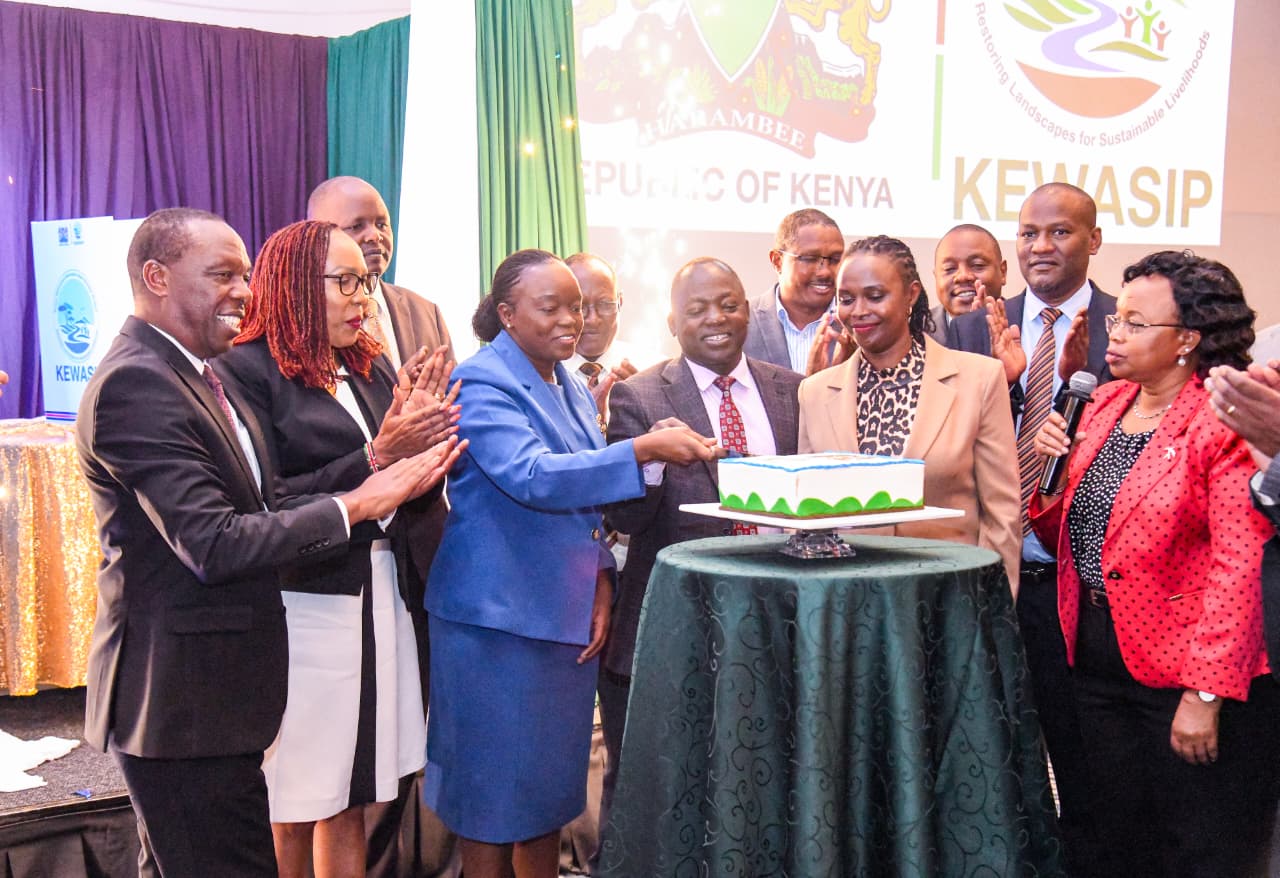
The launch brought together representatives from the implementing counties, the Council of Governors, the World Bank, national implementing entities and other stakeholders involved in conservation and natural resource management.
The project will focus on five priority landscapes: Marsabit, Marmanet, Nyambene Hills, Chyulu Hills and Shimba Hills. The 12 participating counties are Marsabit, Isiolo, Meru, Tharaka Nithi, Laikipia, Samburu, Baringo, Makueni, Kitui, Garissa, Tana River and Kwale.
KEWASIP is intended to address land degradation and climate vulnerability while improving the ecosystems that support communities and economic activity.
Its interventions include sustainable land management, watershed restoration, biodiversity conservation and initiatives to expand community income-generating opportunities.
The project aligns with Kenya’s National Landscape and Ecosystem Restoration Strategy 2023–2032 and the Presidential 15 Billion Tree Growing Initiative, which targets the restoration of 10.6 million hectares of degraded landscapes by 2032. The State Department for Forestry has separately committed to restoring 5.1 million hectares.
The scale of the challenge remains significant. Approximately 88.6 per cent of Kenya’s land is at risk of degradation, while natural resources support more than 80 per cent of livelihoods, according to the project brief.
KEWASIP will prioritise Community Interest Groups, Nature-Based Enterprises, Vulnerable and Marginalised Groups, and marginalised communities.
The project is expected to strengthen community participation in natural resource management while supporting more sustainable livelihoods.
Implementation will focus on hydrosheds, geographical areas that define watershed and river networks. These areas were identified based on the presence of gazetted water towers, major rivers and downstream systems.
The project is also expected to improve water security and climate resilience, support agricultural productivity and food security, create employment opportunities and strengthen coordination in natural resource governance.
County governments are expected to play a key role in implementation through their devolved forestry functions and by incorporating landscape restoration into county development priorities.
The State Department for Forestry is also finalising Adopt-a-Forest guidelines intended to support forest conservation and sustainable management.
Counties have been encouraged to adopt forests within their jurisdictions to contribute to national restoration targets.
Through KEWASIP, the Government aims to advance landscape restoration while linking environmental conservation with improved livelihoods and climate resilience.