AFA and AFCA spotlight quality, innovation, and value addition as Kenyan coffee strengthens its global premium status
By Nemuel Ondima
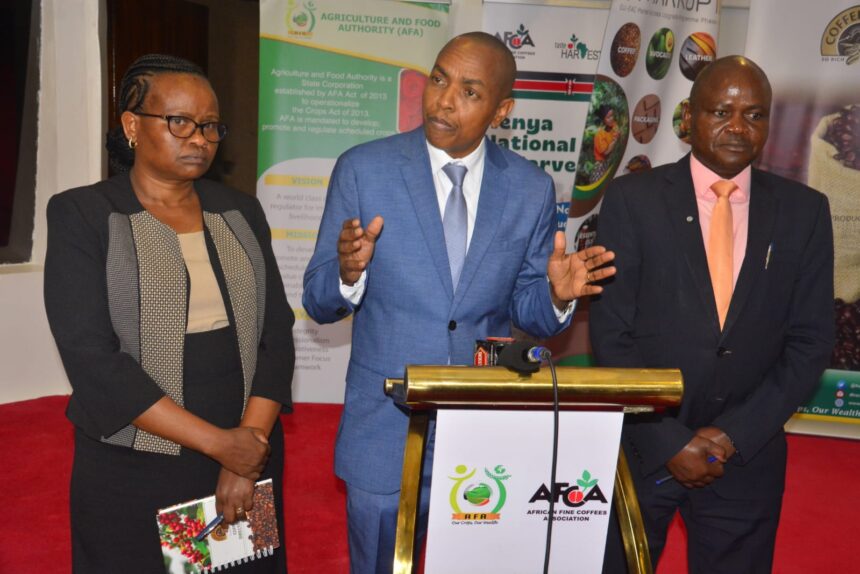
Kenya’s reputation as a producer of exceptional coffee took centre stage at the Taste of Harvest Coffee Breakfast Meeting, where industry leaders, policymakers and development partners gathered to celebrate excellence and reaffirm the country’s ambitions in the global specialty coffee market.
Hosted by the Agriculture and Food Authority (AFA) in partnership with the Africa Fine Coffees Association (AFCA), the high-level forum honoured winners of the 2025 Taste of Harvest Coffee Competition, producers whose coffees stood out for their superior quality, consistency and character.
The event was officiated by the Permanent Secretary for the State Department for Agriculture, Dr. Kipronoh Ronoh, whose presence signalled strong government backing for reforms in the coffee subsector.
In his address, the AFA Director General praised the award recipients, describing their achievement as a reflection of the resilience and craftsmanship of Kenyan farmers.
He noted that platforms such as Taste of Harvest go beyond competition and serve as gateways that connect local producers directly to premium international buyers.
The Taste of Harvest Competition is part of a continent-wide quality initiative hosted annually across AFCA member countries. National competitions, such as Kenya’s, feed into a regional African finale. All submitted samples are evaluated using the Specialty Coffee Association (SCA) scoring system, ensuring credibility, transparency and global recognition.
This year’s edition marked a milestone, recording 100 coffee entries, nearly double last year’s submissions.
The surge followed a strategic decision to waive the USD 300 entry fee for AFCA non-members, opening the door to wider participation and uncovering new talent across coffee-growing regions.
Beyond celebration, the meeting highlighted ongoing efforts by AFA to strengthen the coffee value chain.
Key among them is the enforcement of the Crops (Coffee) (General) Regulations, 2019, enhanced quality assurance systems, and the rollout of digital traceability tools, including work towards a National Coffee Information System.
These reforms aim to protect farmers, improve market transparency and align Kenyan coffee with evolving global sustainability standards.
Value addition emerged as a central theme, with calls for Kenya to move beyond exporting green coffee to investing in specialty production, branding, local roasting and market diversification. Such shifts, stakeholders agreed, are essential to unlocking higher incomes for farmers and securing Kenya’s position as a premium origin.
As the breakfast meeting concluded, the message was clear. With strong partnerships, sound policy and an unwavering focus on quality, Kenyan coffee is not just competing. It is setting the standard on the global stage.