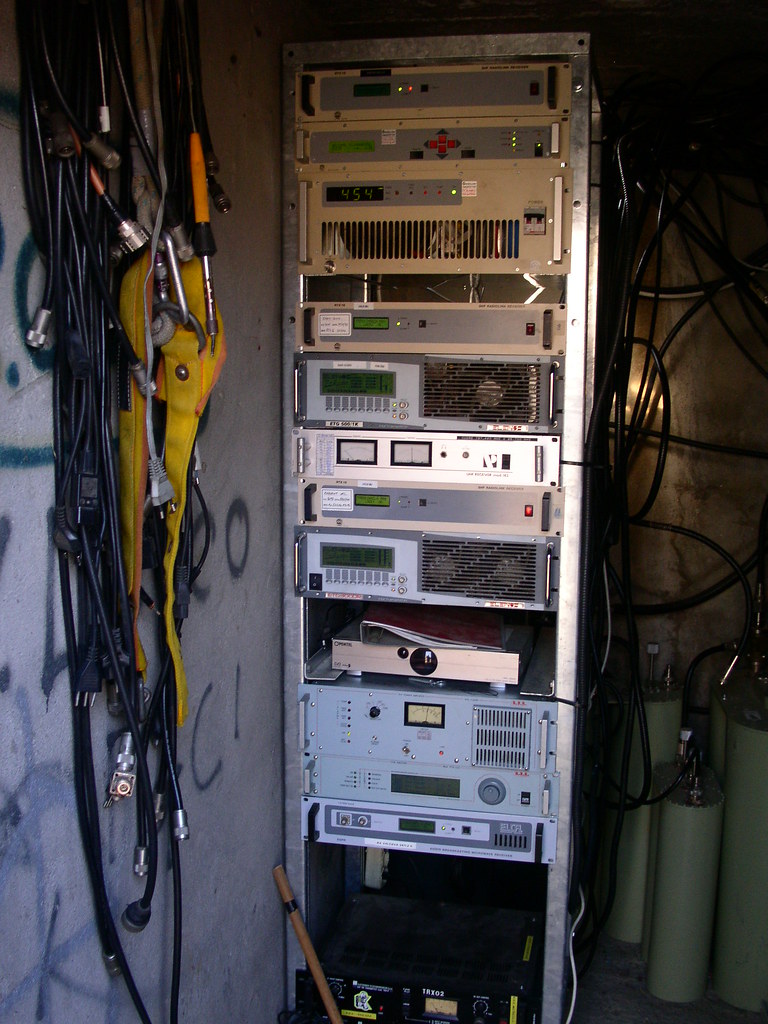
The Death of the Dedicated Radio Appliance
The sprawling data centers of today are no longer defined by racks of blinking, single-purpose boxes. If you walked into a modern enterprise infrastructure hub in 2026, you would notice a distinct absence of dedicated radio frequency appliances. This is not an accident of design; it is the result of a fundamental shift toward Enterprise SDR (Software-Defined Radio). For IT directors and network engineers, the era of buying separate hardware for Wi-Fi, LTE backhaul, and private 5G is effectively over. The future is flexible, virtualized, and driven by code rather than copper.
Traditionally, deploying a new wireless standard meant a capital expenditure nightmare. You purchased a Wi-Fi 6 access point, installed it, and if two years later your site needed private 5G for IoT sensors, you bought a completely different set of hardware. This siloed approach created “functional sprawl,” where physical space and power were wasted on underutilized, specialized devices. Enterprise SDR changes this equation entirely by decoupling the radio functions from the underlying hardware. Now, a single commodity radio front-end can be instructed via software to act as a Wi-Fi 7 AP, a macro-5G base station, or a LoRaWAN gateway, depending on the immediate needs of the business.
Why Enterprise SDR Matters for Scalability
The primary driver behind this adoption is agility. In a fast-moving market, business requirements change weekly. An enterprise might need massive bandwidth for a product launch event and then require low-power, wide-area connectivity for inventory tracking the next month. With Enterprise SDR, this transition happens in seconds through a configuration update in the cloud orchestrator, not through a physical installation team climbing ceilings.
Furthermore, the total cost of ownership (TCO) drops significantly. By standardizing on a single type of radio hardware across the facility, procurement becomes simpler. Inventory management shrinks because there are fewer SKUs to track. When a unit fails, any spare part from any location in the building can replace it, provided the software profile is correctly applied. This modularity is the cornerstone of efficient modern infrastructure.
Overcoming Thermal and Latency Challenges
Consolidating multiple radio functions onto a single silicon chip or system-on-chip (SoC) does introduce engineering challenges, primarily regarding thermal management and signal interference. When a device is switching between high-throughput Wi-Fi and constant-connection cellular protocols, the heat output increases. Modern Enterprise SDR solutions address this with advanced dynamic thermal throttling and AI-driven power management that adjusts transmission power based on real-time demand, ensuring stability without manual intervention.
Latency remains a critical metric for enterprise applications, especially those involving augmented reality (AR) maintenance or autonomous mobile robots. While earlier iterations of software-defined networks suffered from processing delays, current 2026 hardware architectures utilize dedicated field-programmable gate arrays (FPGAs) to handle the time-sensitive physical layer (PHY) processing. This hybrid approach ensures that the flexibility of software meets the rigid timing requirements of industrial protocols.
Interoperability and Vendor Lock-in
A major concern for many CTOs has been vendor lock-in. Historically, moving from one wireless vendor to another was akin to rebuilding the network from scratch. The push toward open radio access network (O-RAN) standards has heavily influenced the Enterprise SDR market. Today, most major vendors are aligning with open interfaces, allowing enterprises to mix and match software stacks from different providers on the same hardware base. This competition drives innovation and prevents any single vendor from holding the infrastructure hostage.
FAQ
What is the difference between SDR and traditional radio?
Traditional radios have fixed hardware components designed for one specific frequency band and protocol. Enterprise SDR uses general-purpose hardware where the functionality is defined by software, allowing the same device to support multiple protocols and bands dynamically.
Is Enterprise SDR secure?
Security in SDR relies on robust encryption and secure boot processes. Since the radio configuration is software-defined, it must be protected from unauthorized tampering. Modern implementations use hardware-rooted trust anchors and end-to-end encryption for over-the-air updates to maintain integrity.
Can I upgrade my existing hardware to SDR?
In many cases, yes. If you have recent, modular hardware from major vendors, a firmware update may enable software-defined capabilities. However, older, hard-wired legacy equipment usually requires replacement to fully benefit from the flexibility and efficiency of Enterprise SDR architectures.
The transition to software-defined infrastructure is not just a trend; it is a necessity for enterprises aiming to remain agile. By embracing Enterprise SDR, organizations can future-proof their connectivity, reduce physical clutter, and respond to business needs with unprecedented speed.