Financial institutions urged to align innovation with stricter compliance frameworks
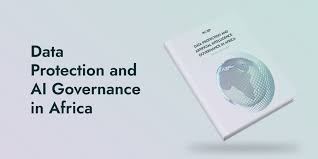
Yellow Card has released its 2026 Report on Data Protection and Artificial Intelligence Governance in Africa, highlighting a decisive shift across the continent toward stricter, enforceable digital regulations as stablecoin adoption accelerates.
The report captures a turning point in Africa’s digital evolution, where countries are moving beyond basic data protection frameworks to actively implementing AI governance regimes. This transition is expected to redefine compliance expectations for banks, telecom operators, and payment service providers integrating emerging financial technologies.
With stablecoins increasingly used for treasury management and cross-border payments, the report emphasizes that regulatory defensibility is now central to institutional expansion across emerging markets. Organizations are being pushed to balance innovation with compliance in a fragmented, multi-jurisdictional environment.
“For enterprises operating across emerging markets, the ability to innovate and modernize payment rails is deeply tied to their capacity to navigate complex, cross-border regulatory landscapes,” said Thelma Okorie, Group Data Protection and Privacy Counsel at Yellow Card and lead author of the report.
The findings reveal a continent approaching regulatory maturity, with 45 African countries having enacted data protection laws and 39 establishing operational authorities. This growing legal infrastructure is creating a more predictable—yet demanding—environment for digital financial services.
AI governance is also gaining traction, with 16 countries rolling out national strategies. Key markets including Nigeria, Angola, Morocco, and Namibia are advancing toward enforceable AI laws, marking a shift from advisory policies to binding regulations. This evolution is expected to significantly impact AI-driven applications such as KYC processes, fraud detection, and risk profiling within the financial sector.
The report further signals a new era of enforcement, with regulators increasingly mandating Data Protection Impact Assessments (DPIAs) and Algorithmic Impact Assessments (AIAs). These requirements are raising compliance thresholds and placing accountability at the center of digital operations.
For financial institutions leveraging stablecoins to unlock liquidity and reduce settlement timelines, the stakes are particularly high. The expansion of cross-border data flows is intensifying scrutiny on infrastructure, pushing firms to adopt robust data security and governance frameworks.
Yellow Card positions its infrastructure as a solution to these challenges, offering integrated APIs and treasury tools that allow businesses to operate across multiple jurisdictions while maintaining compliance. The platform enables institutions to execute transactions across dozens of blockchains, manage fiat accounts globally, and deploy secure stablecoin solutions without navigating regulatory systems individually.
“Stablecoins are powerful tools for business efficiency, treasury management, and mitigating FX volatility risk,” Okorie added. “However, the infrastructure powering them must operate in lockstep with the strictest data protection and AI governance frameworks.”
The report concludes that the convergence of data protection and AI governance is no longer theoretical but a present-day operational requirement, urging institutions to embed privacy-by-design and ethical AI principles as a foundation for sustainable growth in Africa’s rapidly evolving digital economy.