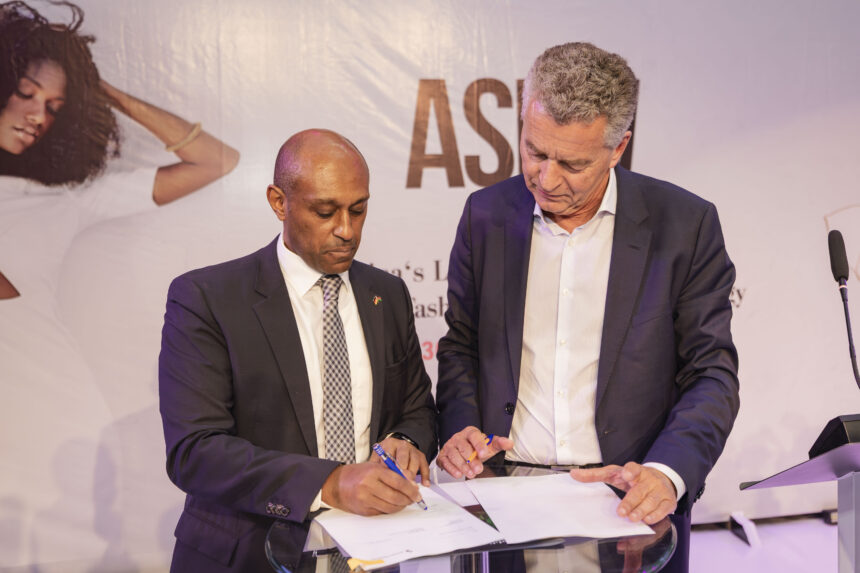
Africa Sourcing and Fashion Week Nairobi has spotlighted Kenya’s growing status as a prime destination for textile and apparel investment, as global supply chains continue to shift in search of more resilient and diversified sourcing bases.
The three-day showcase, running from April 30 to May 2 in Nairobi, has attracted over 150 manufacturers and designers from more than 20 countries, reinforcing Africa’s rising prominence in global fashion, leather and home décor value chains.
The event is being held in partnership with the Ministry of Investments, Trade and Industry.
Industry players at the conference noted that Kenya is increasingly benefiting from global sourcing realignments, with international brands and retailers seeking alternative production hubs closer to emerging consumer markets.
This shift is positioning the country as a strategic gateway for manufacturing investment in the region.
The event has drawn participation from East African policymakers, European Union delegations and representatives of the Common Market for Eastern and Southern Africa, underlining its importance as a platform for regional and international collaboration.
A key feature of this year’s edition is the “Walk for Business” initiative, which is connecting more than 30 high-end African designers with global fashion brands and buyers, creating direct commercial linkages and market access opportunities.
Kenya’s textile and apparel sector continues to attract investor interest due to its preferential trade access under the African Growth and Opportunity Act, supportive industrial policies and established export base. The country remains among Africa’s leading apparel exporters, supplying key international markets.
Despite this progress, stakeholders highlighted a significant production gap, with Kenya importing textiles worth approximately KES129 billion annually. This shortfall presents a major opportunity for local manufacturing, with government estimates indicating that between KES58 billion and KES97 billion in new textile mill investments will be required by 2030.
Demand outlook for the sector remains strong. Apparel export potential is projected at between KES58 billion and KES75 billion in the near term, driven by increased orders from global brands. Meanwhile, the domestic apparel market is expected to grow to around KES32 billion, supported by rising incomes, urban retail expansion and shifting consumer preferences toward locally produced goods.
Looking ahead, Kenya’s textile and apparel exports could grow fourfold to KES258 billion by 2035, driven by the development of industrial parks, expansion of Export Processing Zones and continued investment in modern manufacturing capacity.
Elsama Ndegwa, Administration Secretary at the State Department for Investment Promotion, said the sector is poised to play a transformative role in the economy.
“Kenya is entering a new phase of industrial growth where textile and apparel manufacturing can become a major pillar of exports, jobs and value addition. The opportunity now is to scale local textile production and capture a larger share of global sourcing demand,” she said.
Skander Negasi, CEO of Trade and Fairs Consulting GmbH, noted that Africa is increasingly being recognised as a viable sourcing destination.
“Global buyers are looking for reliable, diversified and future-ready sourcing destinations. Kenya and Africa more broadly are increasingly part of that conversation because of their competitiveness, workforce potential and long-term growth prospects,” he said.
Analysts say that expanding domestic textile production will be critical for Kenya to enhance competitiveness, reduce import dependence and capture more value within the supply chain, particularly as global buyers prioritise sustainability and shorter lead times.
With strong demand fundamentals and growing investor interest, Kenya is steadily positioning itself as one of Africa’s leading textile and apparel manufacturing hubs.