


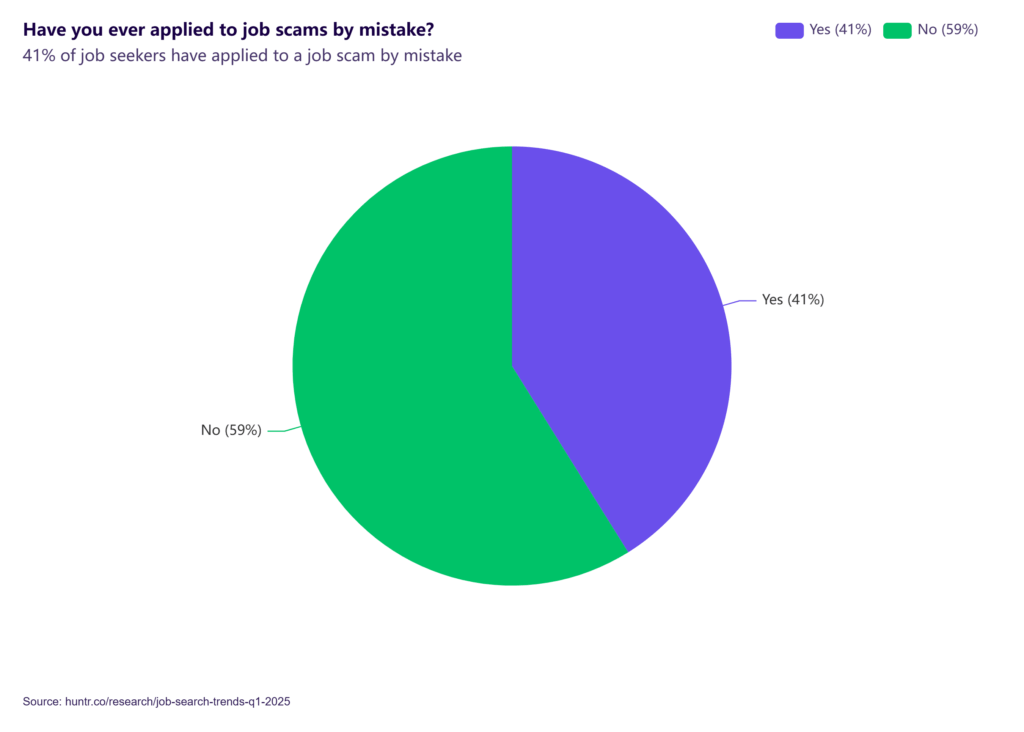
Job scams are ensnaring a staggering 41% of job seekers, with women reporting higher exposure, according to Huntr’s Job Search Trends – Q1 2025 report.
The survey of 600 candidates, part of a broader analysis of 636,000 job postings and 55,000 resumes, exposes a troubling rise in fraudulent postings that’s taking a toll on an already challenging job hunt.
Among the 608 respondents, 250 (41%) admitted to applying to scam jobs, while 358 did not.
Women were more likely to report falling for scams (42%) than men (34.6%), though the report notes this could reflect greater candor rather than targeted attacks.
The data reveals work preferences play a role: women favoring remote roles reported a 40% scam rate, while those eyeing in-office positions faced higher exposure. “Scammers may be crafting in-office or hybrid postings to seem more legitimate,” the report says.
The emotional fallout is significant. Of those who fell for scams, 40.8% felt “exhausted” in their job search, mirroring the 40% exhaustion rate across all candidates.
Unemployed seekers were more likely to be victims than those with full-time jobs, likely due to the pressure of unemployment.
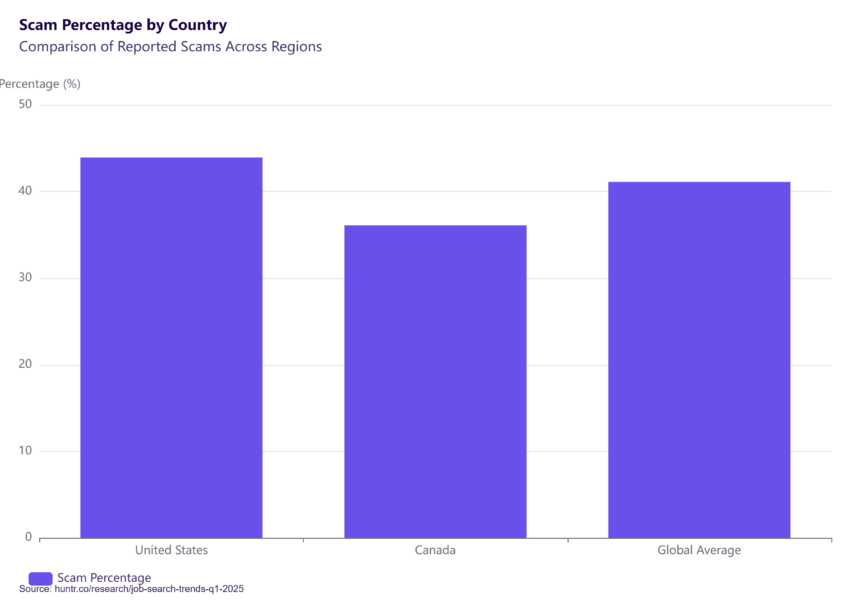
U.S. job seekers reported a 43.95% scam rate compared to 36.11% in Canada, though the smaller Canadian sample suggests a directional trend.
Scam victims also had lower salary expectations, clustering in mid-range bands, while non-victims aimed for near-six-figure roles, hinting that experience sharpens scam-spotting skills.
With half of candidates landing offers in 58 days, the report urges using trusted platforms like Government Jobs (13.6% callback rate) over LinkedIn (2.33%) to avoid scams.
As fraudsters grow bolder, job seekers must stay sharp to secure their next role safely.
Read more at huntr.co.


