African businesses can play a greater role in West Africa’s economic integration, but governments must provide predictable policies, efficient regulation and security to attract long-term capital, Heirs Holdings Chairman Tony O. Elumelu has said.
Speaking at a meeting of the West Africa Integration and Investment Summit (WAIIS) Private Sector Advisory Board in Lagos, Elumelu called for closer cooperation between governments, investors and financial institutions to accelerate industrialisation and cross-border trade.
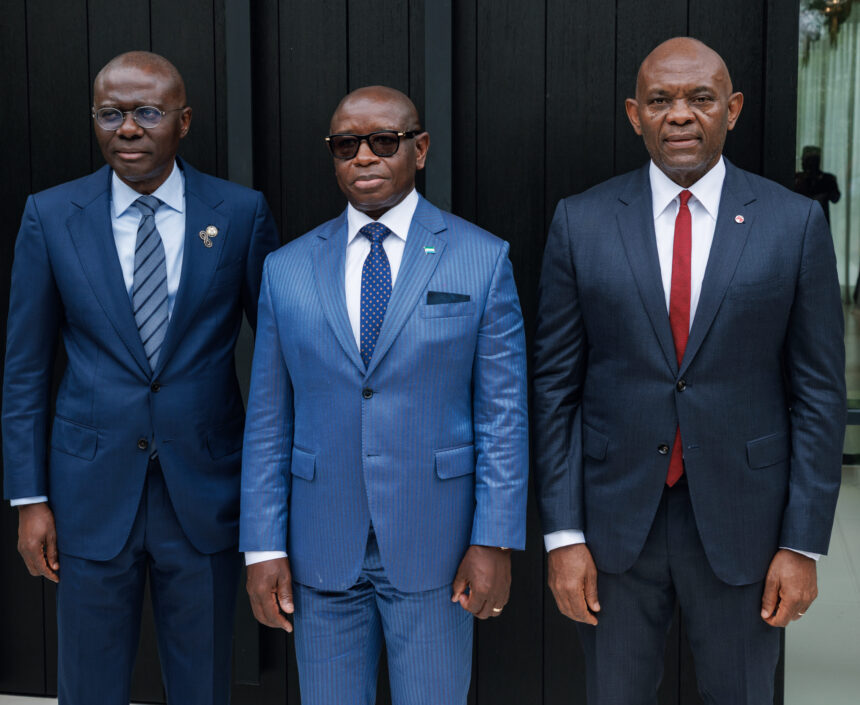
The meeting was held ahead of the inaugural WAIIS summit, scheduled for November 17–18, 2026, in Lungi, Sierra Leone. It was attended by Sierra Leone President Julius Maada Bio, the immediate past Chair of the ECOWAS Authority of Heads of State and Government, alongside prominent African business leaders.
Elumelu welcomed Bio’s efforts to place private investment and enterprise at the centre of the regional integration agenda, pledging to help mobilise African and international capital for priority projects.
He cited opportunities for collaboration with major financial institutions, including the Africa Finance Corporation, Afreximbank, United Bank for Africa and Ecobank.
However, he maintained that private sector investment would depend on governments establishing the right conditions for businesses to commit resources over the long term.
The Heirs Holdings chairman said companies needed to look beyond national boundaries, combine their expertise and capital, and develop competitive industries capable of operating at scale across the region.
“This is consistent with our aspirations to create jobs for our young people,” Elumelu said. “We have all it takes to be prosperous.”
His remarks align with the principles of Africapitalism, which emphasises the role of African businesses in driving economic transformation through long-term investment in strategic sectors.
President Bio said the regional agenda must focus on converting West Africa’s economic potential into productive enterprises, competitive industries, jobs and wealth.
“We are partners in execution, let us transform ideas into partnerships, partnerships into investments, and investments into lasting prosperity for our continent,” Bio told the advisory board.
He said the summit would help consolidate a regional market of more than 400 million people and encourage businesses from West Africa and other parts of the world to increase trade and investment.
The advisory board identified energy trade and industrialisation, strategic minerals, agribusiness and digital transformation as four priority areas for investment.
Lagos State Governor Babajide Sanwo-Olu also stressed the importance of industrial development and the free movement of goods and services. He said governments had a responsibility to provide the assurances businesses needed to invest, produce and trade across borders.
As the summit approaches, Bio has called on board members to take a practical approach to investment mobilisation by engaging prospective investors, matching them with viable projects and identifying financing shortfalls and policy decisions that could delay implementation.
The advisory board brings together business figures from across Africa, including Dangote Group’s Aliko Dangote, FA Limited’s Apostle Folorunso Alakija, Petrolin Group’s Samuel Dossou-Aworet, Afreximbank’s George Elombi and BUA Group’s Abdul Samad Rabiu.
Other members represent energy, finance and investment institutions, including Oando, Africa Finance Corporation, Africa50, the Central Bank of West African States, Orango Investment Corporation, Africa Trading Minerals and Teyliom Group.
The November summit will bring together heads of state, investors and business leaders at the Julius Maada Bio International Conference Centre in Lungi, with the objective of advancing projects that can deepen economic cooperation and deliver measurable results across West Africa.